
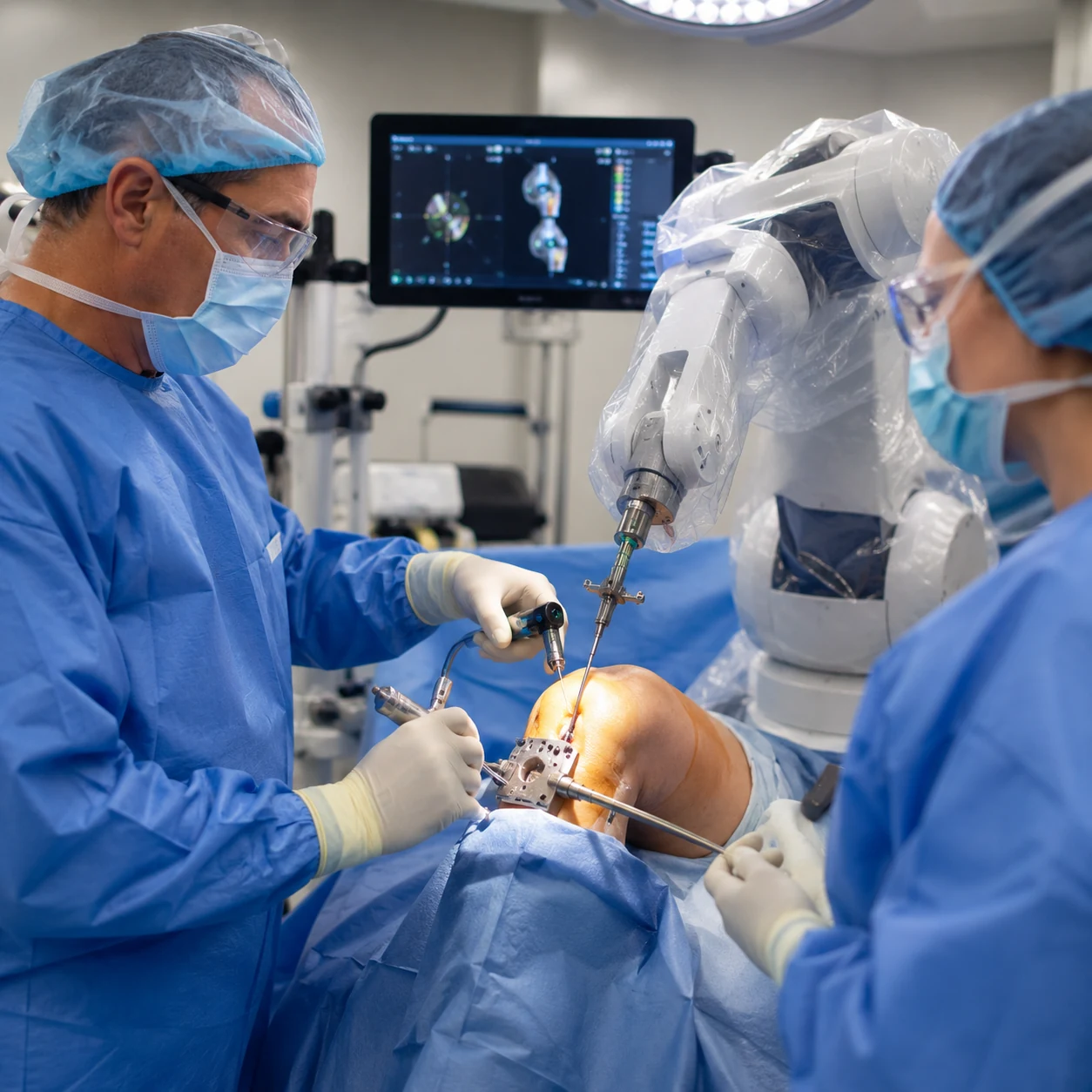
Symptoms, function, examination and X-rays all matter.
A knee replacement discussion usually happens when knee arthritis or joint damage is making walking, stairs, standing, work or sleep genuinely difficult — and when the benefit from non-surgical treatment is no longer enough.
Doctors also look at deformity, stiffness, swelling, walking pattern and imaging findings before advising surgery. The goal is not just pain relief, but better function in real daily life.

Four common situations that deserve a proper knee assessment.
These signs do not confirm that surgery is needed, but they are important reasons to get an orthopedic opinion.
Pain that keeps affecting walking or routine activity
If pain repeatedly limits walking distance, standing time, sleep, stairs or household tasks, a specialist assessment is worthwhile.
Stiffness and reduced movement
Difficulty bending or straightening the knee, sitting cross-legged, getting up from a chair or using stairs can reflect progressive joint disease.
Swelling, instability or visible change in alignment
Repeated swelling, giving-way episodes or increasing bow-leg / knock-knee appearance should be examined rather than self-managed repeatedly.
Treatment is no longer providing enough relief
When medicines, physiotherapy, weight management, injections or activity modification are no longer helping enough, the next step should be reviewed carefully.
Important points patients usually ask before deciding.
Does age alone decide surgery?
No. Age matters, but the bigger factors are joint damage, overall health, mobility needs, daily limitations and how much non-surgical treatment still helps.
Will recovery happen in one day?
Walking often begins early, but strength, confidence, endurance and routine movement improve progressively with rehabilitation.
Does every painful knee need replacement?
No. Some knees need physiotherapy, injections, activity modification or another line of treatment. Diagnosis comes before the decision.
Bring your reports and get the knee assessed properly.
If you already have X-rays, MRI scans or previous prescriptions, bring them to the appointment. A consultation helps clarify the diagnosis and the treatment path that fits your condition.
Book a Knee Evaluation →

